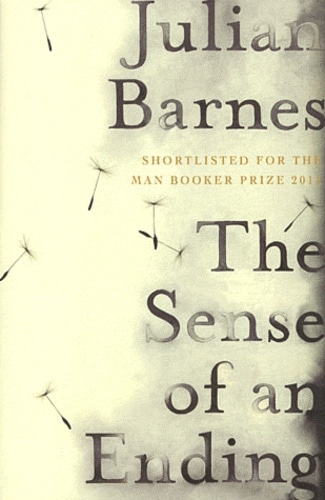

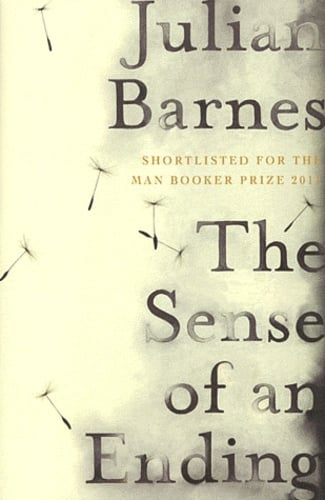
The Sense of an Ending
By Julian Barnes
2011


Summary
Includes poems of thwarted love and disappointment, of raw desire, of the stalking beast, 'eye-teeth/and muzzle/coated with blood'; poems that recognise 'we have too much to gain from the gods, and this is why/they fail to love us'; poems that tell of an obsessive lover coming to grief in a sequence that echoes the old murder ballads
Reviews and Comments
1 reviews
Julian Barnes, 2011 https://hellixmap.bayesia.com/display/1b96ae7da75cbee1 Executive Summary — Memory and Lies Network analyzed: 45 nodes mapping a major philosophical novel and its intellectual ecosystem. The Core of the Network The Sense Of An Ending is a 2011 novel by Julian Barnes, winner of the Man Booker Prize 2011. The narrative centers on Tony Webster, who revisits his past only to discover his memory has systematically deceived him. The novel explores how Subjectivity Of Narration and Self-Deception shape our understanding of the past. Characters and Conflicts Tony Webster — an unreliable narrator confronted with his involuntary lies Adrian Finn — brilliant friend whose Adrian's Suicide structures the entire narrative Veronica Ford — Tony's former girlfriend who embodies the flaws in his memory Sarah Ford — Veronica's mother, guardian of Adrian's Journal, the key to revelations Adrian's Son — the final revelation that rewrites Tony's entire interpretation Dominant Philosophical Themes Six pillars structure the work: Memory — subjective, selective, fundamentally unreliable Time — subjective perception versus objective reality Moral Responsibility — deferred guilt and unforeseen consequences Truth And Knowledge — can we access the objective past? Personal Identity — construction of self through narrative (Narrative Identity) Remorse And Guilt — triggered by Tony's Letter, a forgotten act with tragic consequences Philosophical Apparatus The novel engages major intellectual traditions: Jean-Paul Sartre — Bad Faith, the key concept for understanding Tony's self-deception Albert Camus and The Myth of Sisyphus — resonance with Adrian's reflection on suicide Paul Ricœur — Narrative Identity: how Tony reconstructs himself through narrative Henri Bergson — Bergsonian Duration: lived time versus measured time Edmund Husserl — phenomenology of time consciousness Ludwig Wittgenstein — Limits of Language: the unspeakable nature of lived experience Narrative Structure and Revelation First Part of the Novel — Tony presents a reassuring, apparently coherent version Second Part of the Novel — progressive collapse in the face of revelations Narrator Reliability — Tony is deliberately unreliable, illustrating the Limits of Language and knowledge itself Ethical and Epistemological Stakes The novel poses questions without definitive answers: Ethics of Memory — do we have a moral duty to remember faithfully? History and Narrative — distinction between what happened and what we say about it Consequences of Actions — even forgotten acts have lasting repercussions Free Will — is Adrian's suicide an act of freedom or the product of circumstances? Conclusion This network reveals a novel designed as a meditation on the impossibility of objective knowledge of the past. Through Narrator Reliability, Barnes demonstrates how Bad Faith and Denial can transform an entire life into involuntary lies, posing the ultimate question: who are we if our memories deceive us? —- 🧭 Navigation Guide This network maps the philosophical and narrative architecture of Julian Barnes's The Sense of an Ending, tracing how memory, self-deception, and moral responsibility interweave through the protagonist's unreliable recollection of his past. Step 1 — The Novel and Its Author What to observe: Establish the foundation by identifying the work itself and its creator, then note how the novel's structure mirrors its thematic concerns. Julian Barnes (author) → The Sense Of An Ending (novel) The Sense Of An Ending → First Part of the Novel and Second Part of the Novel The Sense Of An Ending → Man Booker Prize 2011 (recognition) Relationships: Barnes wrote the novel, which is structurally divided into two contrasting parts—the first presenting Tony's comfortable version of events, the second deconstructing it. This binary structure mirrors the novel's central theme: the gap between narrative and truth. Step 2 — The Protagonist and His Unreliable Perspective What to observe: Meet Tony Webster, the narrator whose subjective viewpoint defines the entire network. Trace how his psychological mechanisms shape what we read. Tony Webster (protagonist) → Subjectivity Of Narration Tony Webster → Self-Deception and Denial Subjectivity Of Narration → Narrator Reliability Self-Deception → Bad Faith (Sartrean concept) Relationships: Tony embodies the novel's central literary problem: his first-person narration is structurally unreliable because he unconsciously rewrites his past through self-deception and denial to avoid guilt. These psychological mechanisms are illuminated by the existentialist concept of Bad Faith. Step 3 — The Core Characters and the Central Tragedy What to observe: Identify the four other major characters whose lives intersect with Tony's, and the catastrophic event that binds them. Tony Webster ↔ Adrian Finn (friends) Tony Webster ↔ Veronica Ford (romantic relationship) Adrian Finn ↔ Veronica Ford (later relationship) Adrian Finn → Adrian's Suicide (central tragedy) Sarah Ford (Veronica's mother) → Adrian's Son (reveals hidden paternity) Relationships: The character network shows overlapping emotional bonds: Tony loses Veronica to his friend Adrian, who later reveals his relationship with Sarah Ford. Adrian's suicide is the structural pivot of the novel, and the revelation of Adrian's son disrupts Tony's understanding retroactively. These entanglements expose how Tony's self-serving narrative has distorted the truth. Step 4 — The Catalyst: Tony's Letter and Its Unforeseen Consequences What to observe: Examine the seemingly minor act whose consequences ripple through the entire narrative, illustrating the novel's moral philosophy. Tony Webster → Tony's Letter (wrote) Tony's Letter → Adrian Finn and Veronica Ford (addressed to both) Tony's Letter → Consequences of Actions Tony's Letter → Remorse And Guilt Consequences of Actions → Moral Responsibility Relationships: Tony minimized the importance of a cruel letter he sent to Adrian and Veronica in youth, yet it becomes the hidden trigger for the tragedy. This illustrates the novel's key moral insight: actions have deferred consequences we cannot foresee or escape. The letter's aftermath provokes Tony's remorse and raises the question of responsibility for unintended harm. Step 5 — Memory, Truth, and Philosophical Uncertainty What to observe: Trace how the novel's central themes—memory, time, and knowledge—are philosophically grounded in Continental philosophy, particularly phenomenology and existentialism. Memory → Truth And Knowledge (problematizes) Memory → Epistemology (raises questions about) Memory → Ethics of Memory Memory → Phenomenology of Memory Time ← Henri Bergson and Bergsonian Duration Personal Identity → Narrative Identity (theorized by Paul Ricœur) Relationships: Memory is unreliable not merely psychologically but epistemologically—we cannot access objective truth about the past. Edmund Husserl's phenomenology of consciousness and Bergson's concept of lived duration illuminate how time and memory function in Tony's narrative. Paul Ricœur's theory shows that identity itself is constructed narratively, making Tony's self-creation through selective memory a philosophical problem, not merely a personal flaw. Step 6 — Existentialism, Suicide, and Free Will What to observe: Understand how Adrian Finn's suicide operates as both a narrative event and a philosophical question, anchoring the novel's existentialist framework. Adrian Finn → Adrian's Suicide Adrian's Suicide → Free Will (raises the question of) Adrian's Suicide → Existentialist Philosophy Existentialist Philosophy ← Albert Camus and Jean-Paul Sartre Albert Camus → The Myth of Sisyphus (resonates with Adrian's suicide) Adrian Finn → Existentialist Philosophy (embodies the questions of) Ludwig Wittgenstein → Limits of Language (illuminates what cannot be said) Relationships: Adrian's suicide raises the existentialist question: is it an act of absolute freedom or determined by circumstance? Camus's reflection on suicide as the fundamental philosophical problem echoes Adrian's position. Sartre's concepts of Bad Faith and responsibility illuminate Tony's evasion of guilt. Wittgenstein's insight on the limits of language explains why Tony cannot fully articulate or understand the truth of what happened. Overview This walkthrough reveals a nested structure: at the surface, The Sense of an Ending is a narrative about Tony Webster's self-discovery through revisiting his past. But beneath lies a philosophical investigation into how memory constructs identity, how self-deception masks moral responsibility, and how language and consciousness fundamentally limit our access to truth. The graph topology shows Tony at the center, radiating outward through four layers: (1) his psychological mechanisms (self-deception, denial, unreliability); (2) his relationships with other characters and the events that bind them; (3) the moral and philosophical themes these events raise (responsibility, consequences, guilt); and (4) the Continental philosophical frameworks (phenomenology, existentialism, narrative theory) that give these themes conceptual depth. Following this path from character and plot through psychology to philosophy maps the novel's own movement: from a comfortable personal narrative toward unsettling epistemological and ethical truth.
Julian Barnes, 2011 https://hellixmap.bayesia.com/display/1b96ae7da75cbee1 Executive Summary — Memory and Lies Network analyzed: 45 nodes mapping a major philosophical novel and its intellectual ecosystem. The Core of the Network The Sense Of An Ending is a 2011 novel by Julian Barnes, winner of the Man Booker Prize 2011. The narrative centers on Tony Webster, who revisits his past only to discover his memory has systematically deceived him. The novel explores how Subjectivity Of Narration and Self-Deception shape our understanding of the past. Characters and Conflicts Tony Webster — an unreliable narrator confronted with his involuntary lies Adrian Finn — brilliant friend whose Adrian's Suicide structures the entire narrative Veronica Ford — Tony's former girlfriend who embodies the flaws in his memory Sarah Ford — Veronica's mother, guardian of Adrian's Journal, the key to revelations Adrian's Son — the final revelation that rewrites Tony's entire interpretation Dominant Philosophical Themes Six pillars structure the work: Memory — subjective, selective, fundamentally unreliable Time — subjective perception versus objective reality Moral Responsibility — deferred guilt and unforeseen consequences Truth And Knowledge — can we access the objective past? Personal Identity — construction of self through narrative (Narrative Identity) Remorse And Guilt — triggered by Tony's Letter, a forgotten act with tragic consequences Philosophical Apparatus The novel engages major intellectual traditions: Jean-Paul Sartre — Bad Faith, the key concept for understanding Tony's self-deception Albert Camus and The Myth of Sisyphus — resonance with Adrian's reflection on suicide Paul Ricœur — Narrative Identity: how Tony reconstructs himself through narrative Henri Bergson — Bergsonian Duration: lived time versus measured time Edmund Husserl — phenomenology of time consciousness Ludwig Wittgenstein — Limits of Language: the unspeakable nature of lived experience Narrative Structure and Revelation First Part of the Novel — Tony presents a reassuring, apparently coherent version Second Part of the Novel — progressive collapse in the face of revelations Narrator Reliability — Tony is deliberately unreliable, illustrating the Limits of Language and knowledge itself Ethical and Epistemological Stakes The novel poses questions without definitive answers: Ethics of Memory — do we have a moral duty to remember faithfully? History and Narrative — distinction between what happened and what we say about it Consequences of Actions — even forgotten acts have lasting repercussions Free Will — is Adrian's suicide an act of freedom or the product of circumstances? Conclusion This network reveals a novel designed as a meditation on the impossibility of objective knowledge of the past. Through Narrator Reliability, Barnes demonstrates how Bad Faith and Denial can transform an entire life into involuntary lies, posing the ultimate question: who are we if our memories deceive us? —- 🧭 Navigation Guide This network maps the philosophical and narrative architecture of Julian Barnes's The Sense of an Ending, tracing how memory, self-deception, and moral responsibility interweave through the protagonist's unreliable recollection of his past. Step 1 — The Novel and Its Author What to observe: Establish the foundation by identifying the work itself and its creator, then note how the novel's structure mirrors its thematic concerns. Julian Barnes (author) → The Sense Of An Ending (novel) The Sense Of An Ending → First Part of the Novel and Second Part of the Novel The Sense Of An Ending → Man Booker Prize 2011 (recognition) Relationships: Barnes wrote the novel, which is structurally divided into two contrasting parts—the first presenting Tony's comfortable version of events, the second deconstructing it. This binary structure mirrors the novel's central theme: the gap between narrative and truth. Step 2 — The Protagonist and His Unreliable Perspective What to observe: Meet Tony Webster, the narrator whose subjective viewpoint defines the entire network. Trace how his psychological mechanisms shape what we read. Tony Webster (protagonist) → Subjectivity Of Narration Tony Webster → Self-Deception and Denial Subjectivity Of Narration → Narrator Reliability Self-Deception → Bad Faith (Sartrean concept) Relationships: Tony embodies the novel's central literary problem: his first-person narration is structurally unreliable because he unconsciously rewrites his past through self-deception and denial to avoid guilt. These psychological mechanisms are illuminated by the existentialist concept of Bad Faith. Step 3 — The Core Characters and the Central Tragedy What to observe: Identify the four other major characters whose lives intersect with Tony's, and the catastrophic event that binds them. Tony Webster ↔ Adrian Finn (friends) Tony Webster ↔ Veronica Ford (romantic relationship) Adrian Finn ↔ Veronica Ford (later relationship) Adrian Finn → Adrian's Suicide (central tragedy) Sarah Ford (Veronica's mother) → Adrian's Son (reveals hidden paternity) Relationships: The character network shows overlapping emotional bonds: Tony loses Veronica to his friend Adrian, who later reveals his relationship with Sarah Ford. Adrian's suicide is the structural pivot of the novel, and the revelation of Adrian's son disrupts Tony's understanding retroactively. These entanglements expose how Tony's self-serving narrative has distorted the truth. Step 4 — The Catalyst: Tony's Letter and Its Unforeseen Consequences What to observe: Examine the seemingly minor act whose consequences ripple through the entire narrative, illustrating the novel's moral philosophy. Tony Webster → Tony's Letter (wrote) Tony's Letter → Adrian Finn and Veronica Ford (addressed to both) Tony's Letter → Consequences of Actions Tony's Letter → Remorse And Guilt Consequences of Actions → Moral Responsibility Relationships: Tony minimized the importance of a cruel letter he sent to Adrian and Veronica in youth, yet it becomes the hidden trigger for the tragedy. This illustrates the novel's key moral insight: actions have deferred consequences we cannot foresee or escape. The letter's aftermath provokes Tony's remorse and raises the question of responsibility for unintended harm. Step 5 — Memory, Truth, and Philosophical Uncertainty What to observe: Trace how the novel's central themes—memory, time, and knowledge—are philosophically grounded in Continental philosophy, particularly phenomenology and existentialism. Memory → Truth And Knowledge (problematizes) Memory → Epistemology (raises questions about) Memory → Ethics of Memory Memory → Phenomenology of Memory Time ← Henri Bergson and Bergsonian Duration Personal Identity → Narrative Identity (theorized by Paul Ricœur) Relationships: Memory is unreliable not merely psychologically but epistemologically—we cannot access objective truth about the past. Edmund Husserl's phenomenology of consciousness and Bergson's concept of lived duration illuminate how time and memory function in Tony's narrative. Paul Ricœur's theory shows that identity itself is constructed narratively, making Tony's self-creation through selective memory a philosophical problem, not merely a personal flaw. Step 6 — Existentialism, Suicide, and Free Will What to observe: Understand how Adrian Finn's suicide operates as both a narrative event and a philosophical question, anchoring the novel's existentialist framework. Adrian Finn → Adrian's Suicide Adrian's Suicide → Free Will (raises the question of) Adrian's Suicide → Existentialist Philosophy Existentialist Philosophy ← Albert Camus and Jean-Paul Sartre Albert Camus → The Myth of Sisyphus (resonates with Adrian's suicide) Adrian Finn → Existentialist Philosophy (embodies the questions of) Ludwig Wittgenstein → Limits of Language (illuminates what cannot be said) Relationships: Adrian's suicide raises the existentialist question: is it an act of absolute freedom or determined by circumstance? Camus's reflection on suicide as the fundamental philosophical problem echoes Adrian's position. Sartre's concepts of Bad Faith and responsibility illuminate Tony's evasion of guilt. Wittgenstein's insight on the limits of language explains why Tony cannot fully articulate or understand the truth of what happened. Overview This walkthrough reveals a nested structure: at the surface, The Sense of an Ending is a narrative about Tony Webster's self-discovery through revisiting his past. But beneath lies a philosophical investigation into how memory constructs identity, how self-deception masks moral responsibility, and how language and consciousness fundamentally limit our access to truth. The graph topology shows Tony at the center, radiating outward through four layers: (1) his psychological mechanisms (self-deception, denial, unreliability); (2) his relationships with other characters and the events that bind them; (3) the moral and philosophical themes these events raise (responsibility, consequences, guilt); and (4) the Continental philosophical frameworks (phenomenology, existentialism, narrative theory) that give these themes conceptual depth. Following this path from character and plot through psychology to philosophy maps the novel's own movement: from a comfortable personal narrative toward unsettling epistemological and ethical truth.